Muslim College Student Experiences

Using online survey and interview data from 100+ Muslim college students, this study explores the perspectives and experiences of Muslim college students from universities and colleges in three iterations: 1) California, 2) Historically Black Colleges and Universities (HBCUs), and 3) across the United States to understand the type and quality of services available to this student population in institutions of higher education.

Applying Critical Race Theory (CRT), with a central focus on intersectionality, this study allows Muslim college students to tell their own stories as a form of counter narrative to debunk stereotypes, correct misperceptions, and inform the misinformed. This study underscores the intersection of Muslim college students’ religious, ethnic, racial, immigrant, and international identities. It is imperative in the 2016 post-presidential election to generate an intellectual discourse that allows for the fruitful exchange of ideas and scholarly debate. This study explores:

  • The perceptions and concerns of Muslim college students on college campuses, post-2016 presidential election

  • The counter narratives of Muslim college students and their perceptions on their Muslim identity, with a focus on critical intersections of social identities

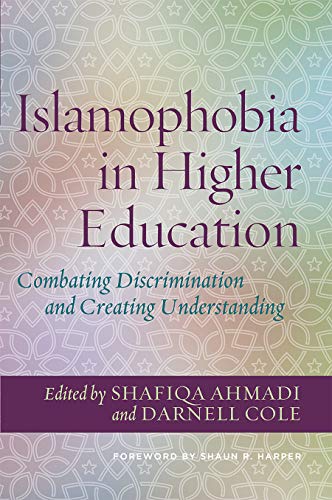
Islamophobia in Higher Education: Combating Discrimination and Creating Understanding

Edited by Professors Shafiqa Ahmadi and Darnell Cole

While Islamophobia was present in our society before 9/11, it has become more pervasive in recent years. This is evidenced by the current social and political climate, hate speech and hate crimes directed at Muslims, and the Supreme Court’s upholding of Presidential Proclamation 645 that effectively bans Muslim immigration from coming to the U.S.

What does this mean for Muslim students in college, and indeed for institutions of higher education as they navigate law and policy on the one hand and adhere to their mission of achieving inclusive and equitable educational environments on the other?

This book begins by critically engaging with how current laws and policies institutionalize Islamophobia and affect the intersectionality and diversity within the Muslim community. It includes multidisciplinary voices, such as an international human rights attorney, a civil rights attorney, a criminal law attorney, student affairs practitioners, and research faculty whose work on this marginalized student population are traditionally not recognized within academic settings; and brings the voices of female Muslim scholars to the fore. Each chapter includes a critical analysis of the literature, a legal analysis when appropriate, a set of recommendations for policy and practice, and discussion questions.